![]() |
![]() |
![]() | ||
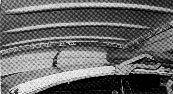
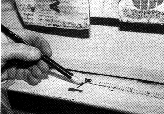
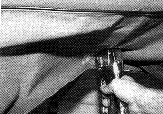
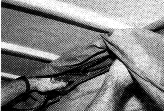
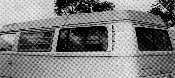
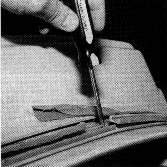
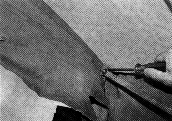
LEFT: We finished the top off with light scrubbing with a no-scratch cleanser to remove the last of the stubborn stains. Our top now looks as clean and white as the day it rolled out of the showroom, though maybe not as shiny. CENTER: The next step was to remove the remainder of the old canvas tent material. Four aluminum moldings along the roof secure the canvas bottom to the top of the van, with about a zillion little screws. Remove these moldings and safely store them and the screws, you'll need them later. RIGHT, before the canvas can be removed from the shell, both support legs must be removed (carefully support the poptop with a sturdy box), as well as the three rubber hold-down straps. | ||||
![]() |
![]() |
![]() | ||
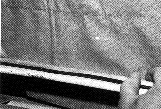
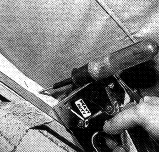
LEFT, the canvas is attached to the top with four plastic strips that are stapled in place. Pry these strips off, remove the staples and save the strips, you'll be reusing them. Additional staples hold the canvas to the wood strips along the top, remove them and pull off the canvas. CENTER, this is what the inside of the poptop will look like with the canvas removed. Now's a good time to do that extra cleaning in those areas that are impossible to reach with the canvas in place. For the next step, get out a tape measure and marker. RIGHT, with a tape measure and grease pencil, mark the centers at front and rear of both the van roof and camper top - you'll have four marks. Now position the new canvas in place, the narrow section goes forward while the edge with the plastic welt cord goes down. |
||||
![]() |
![]() |
![]() | ||
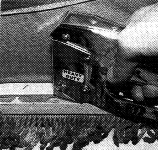
LEFT, ... places center marks on their tents. Starting in front, fold the top flap under, align the center mark on the canvas with the mark on the poptop and staple in place. Now go to the rear of the top and do the same there. The amount of material that you fold under determines the fit of your top. For best results, we recommend that you only bring the canvas about half way down the wood before stapling. We used a heavy-duty manual stapler, with 3/8-inch staples . . . it offered great results. CENTER, work your way from the center and staple to the sides, taking up slack in the corners. Only staple every six-inches or so at this point, as the canvas may need some adjusting, which would require removing the staples. RIGHT: Temporarily prop the top back up on its support legs, set the aluminum moldings on top of the plastic welt cord at the canvas bottom and check for fit. This is a very important step because if the canvas is too tight, it will rip or be impossible to open when completed. If left too loose, the tent will be saggy. Adjust the canvas by removing the staples in the area in question and either take in or let out a little material. This part of the job is tedious. but take your time and do it right! | ||||
![]() | ![]() |
![]() | ||
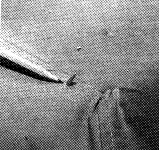
LEFT, once the canvas is properly adjusted, the plastic strips can be stapled in place. We found the best way to ensure that the original screw holes for the tie-downs match the holes in the top was to first locate them with a pointed object (a nail works just fine) before stapling them in place. CENTER, make sure the plastic strips are all the way up against the top (this gives the canvas that "fitlook" from the inside} and then place a staple every couple of inches. We found it necessary to go back over the staples with a hammer to ensure that they were all the way down-that plastic is tough stuff. RIGHT, with the top of the canvas securely in place, replace the support legs. Locate the original holes by coming through the back side with a sharp object and piercing the canvas. Don't forget the washers on the back side of the bolt. | ||||
![]() | Online BROCHURE | ![]() | Online ORDER FORM | (Next Page...) | ||||||||||||||||||||||||||